Used Lawn Mower Buying Guide 2025: How to Find, Inspect & Buy a Second-Hand Mower Safely

By Ron | Certified Small Engine Mechanic | 15+ Years Experience | Last Updated: May 2025
Buying a used lawn mower can be one of the smartest purchases you make – or one of the most frustrating. The difference lies entirely in knowing what to look for. A well-maintained used mower at half the retail price is an exceptional value. A neglected mower hiding a bent crankshaft or a failed transmission is an expensive mistake. This guide gives you the complete framework for finding, inspecting, and confidently purchasing a second-hand mower in 2025.
Chapter 1: The Case for Buying Used
Real Cost Savings
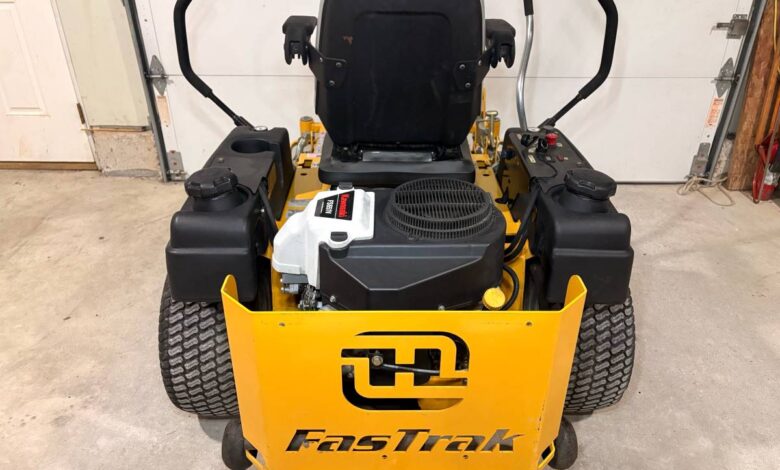
New residential zero-turn mowers retail for $3,000-$7,000. Prosumer walk-behind mowers from $400-$900. Yet the same machines in used condition – often with minimal hours and excellent mechanical condition – sell for 40-60% of retail price. A homeowner who buys a 2-year-old prosumer zero-turn with 80 hours for $2,500 instead of $5,000 new has saved $2,500. If the machine lasts its expected remaining 12+ years, that savings is substantial.
Depreciation Front-Loading
Lawn equipment depreciates most steeply in its first 1-2 years of ownership – not because it wears out, but because of consumer psychology and market dynamics. A mower that works perfectly at age 2 with 100 hours is mechanically nearly identical to a new unit, yet sells for dramatically less. The smart buyer captures the depreciation curve and lets the original buyer absorb the largest percentage loss.
Chapter 2: Where to Find Used Mowers
The Best Sources (Ranked by Value)
1. Estate Sales and Property Liquidations: Gold mine territory. Equipment sold from estates is often well-maintained by organized owners, priced to sell quickly, and frequently includes service records. Arrive early – competition is real.
2. End-of-Season Dealer Trade-Ins: Many dealers accept trade-ins when customers upgrade. They sell these on the lot with basic inspection completed. Slightly higher prices than private sales, but often with a short dealer warranty or at least mechanical disclosure.
3. Facebook Marketplace and Craigslist: The highest volume of listings, but requires the most diligence. Sellers range from meticulous first owners selling a surplus machine to those quietly offloading a machine they know is problematic. Use the inspection protocol in Chapter 3 rigorously here.
4. Auction Sites (GovPlanet, MachineryTrader): Government and municipal fleet liquidations often yield well-maintained commercial equipment at excellent prices. These machines have documented service records and known usage hours.
5. Neighbors and Word-of-Mouth: Often the best deals with the best documentation. Ask around – you may find a neighbor who has upgraded and is willing to sell to someone they trust.
What to Avoid
Avoid mowers sold “as-is, no return, runs when parked” without the ability to start and run the machine before purchase. This phrase is universally understood in the used equipment world to mean “there is a problem I am not disclosing.” Any seller unwilling to let you inspect and start the mower before purchase is one to walk away from.
Chapter 3: The Pre-Purchase Inspection Protocol
This is the most valuable section of this guide. Work through this inspection systematically before any purchase decision.
Step 1: Visual Inspection (Before Starting the Engine)
Frame and deck: Look for welds that have cracked, bent frame rails, and deck rust. Surface rust on the underside of the deck is normal and manageable. Rust holes that go through the deck steel, or severe flaking rust on the frame rails, indicate poor storage and accelerated corrosion. Check the deck for impact dents – significant denting indicates the machine has hit hard objects at speed.
Tires: Check tread remaining and sidewall condition. Cracked sidewalls indicate UV exposure and age, even if hours are low. Replacement tires are inexpensive, but the presence of badly aged tires is a general indicator of storage conditions.
Engine exterior: Look for oil leaks (dark staining around the valve cover gasket, oil filter, or drain plug area). Light seepage is common on older engines; heavy external oil is a concern. Check the air filter – a severely dirty air filter means the previous owner ran it in this condition, which accelerates internal engine wear. The air filter condition is one of the best indicators of how the previous owner maintained the machine.
Belts: Inspect all visible belts for cracking (heat checking on the inner surface) and glazing (shiny inner surface from slipping). Replacement belts are cheap, but worn belts indicate the machine was not regularly maintained.
Step 2: Engine Oil Check
Remove the dipstick and examine the oil. Fresh oil is light amber to brown; very old oil is black. A milky or gray color indicates water contamination (from a blown head gasket or moisture condensation in a neglected machine). Severely black oil means oil changes were infrequent. Foamy oil is another indication of water mixing with oil – a significant mechanical concern. Check the level – a machine delivered with low oil may have had oil-related engine damage in its history.
Step 3: Cold Start Test
Ask the seller not to warm the engine before your arrival. A cold start is a much more revealing test than a warm start. Cold starts require proper choke operation, adequate compression, and a functional ignition system. A machine that only starts reliably when warm may have low compression or ignition system issues that a warm engine partially masks.
What to listen for during cold start:
- Easy cranking speed (slow cranking indicates a weak battery, tight bearings, or low compression)
- Quick fire-up without excessive cranking
- Smooth idle after choke is opened – rough idle suggests carburetor or ignition issues
- No excessive smoke: white smoke on cold start is normal condensation burning off; persistent blue or black smoke is not normal
Step 4: Running Inspection
Once running, let it idle for 2-3 minutes and observe:
- Listen for any knocking or rattling – a healthy engine runs smoothly and quietly at idle
- Check for oil leaks with the engine running – some leaks only appear under oil pressure
- Rev the engine to full throttle – it should accelerate cleanly without surging or hesitation
- Engage the blade (on riding mowers, engage the PTO) – listen for any change in engine behavior under blade load
Step 5: Drive System Check (Riding Mowers)
For riding mowers and zero-turns, the drive system inspection is critical:
- Drive forward and backward slowly – the transmission should engage smoothly without jerking, slipping, or making hydraulic whining sounds
- For zero-turns: drive in slow circles and figure-eights – both sides should feel equal. A transmission pulling significantly harder or behaving differently from the other side indicates wear or internal damage
- Test the braking system – the parking brake should hold the machine stationary on a slight incline
Step 6: Cutting Blade and Deck Inspection
With the engine completely off, tip the mower (air filter side up) or access the blade from below on a riding mower. Grab the blade and try to move it laterally (in and out, perpendicular to its rotation axis). Any movement (play) in the lateral direction indicates worn spindle bearings – a repair that costs $25-$80 in parts. Vertical play is normal.
Inspect the blade edge: is it sharp? Are there significant nicks or bending? A bent blade is a red flag – it indicates a significant impact (rock, root, concrete edge) that may also have bent or damaged the crankshaft.
Step 7: Crankshaft Straightness (Walk-Behind Mowers)
A bent crankshaft is the most expensive common problem on walk-behind mowers. It occurs when the blade strikes a solid object at full RPM. Symptoms: severe vibration during operation, blade appears to orbit rather than spin in a fixed circle. Test: with the engine off, slowly rotate the blade by hand. Watch the end of the blade – it should describe a perfect circle. If it oscillates up and down, the crankshaft is bent. Walk away from this purchase.
Chapter 4: Price Negotiation Framework
Once you have completed the inspection and have a clear picture of the machine’s condition, use this framework for negotiation:
- Research retail new price for the same or similar current model.
- Base value: A good-condition used mower with low hours is worth 50-65% of new retail.
- Deductions: Subtract $50-$200 for each item that needs replacement (blade, belts, battery, tires). Subtract $300-$600 for carburetor issues. Subtract 20-30% from base for high hours (over 400 on a residential machine).
- Walk away price: If any of the following are present, walk away or require a very steep discount: bent crankshaft, bent blade (on a zero-turn), evidence of water in oil, significant structural rust, or a seller who will not allow a full running inspection.
Chapter 5: Post-Purchase First Steps
Once you have made your purchase, follow these steps before putting the machine into service:
- Change the engine oil and filter immediately – regardless of what the seller claimed about recent maintenance. Fresh oil is your baseline.
- Replace the air filter – a $5-$15 insurance policy against the unknown.
- Replace the spark plug – verify the gap matches the specification in the owner’s manual.
- Sharpen and balance the blade.
- Check and grease all zerks.
- Run the mower for 30 minutes under light load before any full-effort mowing session. This lets you identify any issues that only appear under sustained operation (overheating, oil leaks, belt slippage).
For complete first-season maintenance guidance, read our Mower Maintenance Master Guide. For choosing the right type of used mower for your property, see our Zero-Turn Mower Guide and our Walk-Behind Mower Guide.
Conclusion
Buying a used mower with confidence is a skill, and this guide gives you the tools to exercise it. The inspection protocol in Chapter 3 alone will prevent you from making a costly mistake. Combined with strategic sourcing and a sound price negotiation framework, the used market offers exceptional value that makes brand-new pricing hard to justify for most homeowners.
About the Author: Ron is a certified small engine mechanic with 15+ years of experience inspecting, purchasing, and refurbishing used outdoor power equipment. Every recommendation on RonMowers.com is backed by hands-on expertise.
