Walk-Behind Lawn Mowers: The Ultimate 2025 Guide to Gas, Electric & Reel Mowers

By Ron | Lawn Care Equipment Specialist | 15+ Years Experience | Last Updated: May 2025
Walk-behind mowers remain the backbone of residential lawn care worldwide. Despite the rise of zero-turns and robotic mowers, the walk-behind delivers unmatched versatility, maneuverability in tight spaces, and affordability. This guide covers every category – gas push, gas self-propelled, battery-powered, corded electric, and reel mowers – so you can make the right choice for your lawn in 2025.
Chapter 1: Types of Walk-Behind Mowers
Gas Push Mowers
The classic design. A gas engine drives the blade; the operator provides all forward motion. Best for small, flat lawns under 0.25 acre where maneuverability is paramount. Modern gas push mowers use 140cc-190cc OHV (overhead valve) engines from Honda, Briggs & Stratton, or Kawasaki. OHV engines run cooler, produce more power per cc, and last longer than the older side-valve (flathead) designs they replaced.
Gas Self-Propelled Mowers
A transmission drives the rear (or front) wheels, reducing operator fatigue significantly on medium to large lawns. Rear-wheel drive provides better traction on hills and slopes – always prefer rear-wheel drive for uneven terrain. Front-wheel drive is less expensive and easier to maneuver when turning. Variable-speed self-propel systems (like Honda’s HRX series or Toro’s Personal Pace) allow the operator to set pace simply by applying pressure to the handle – intuitive and highly effective. The Toro TimeMaster 30″ takes this concept further with a 30-inch deck, covering more ground per pass without sacrificing maneuverability.
Battery-Powered Walk-Behind Mowers
The fastest-growing segment. 40V-80V brushless platforms from EGO, Greenworks, Ryobi, Milwaukee, and Makita now match or exceed the power of most consumer gas mowers. Key advantages: quieter operation, zero emissions, no fuel or oil maintenance. Key limitation: runtime (typically 45-75 minutes per battery charge on a quality 56V 7.5Ah pack). For lawns up to 1 acre, battery-powered is now a completely viable choice in 2025.
Corded Electric Mowers
Suitable for very small lawns (under 0.20 acre) with nearby outlet access. No runtime limitation whatsoever, lightest weight, lowest cost, and zero maintenance. The 100-foot cord is a genuine management challenge and limits where you can mow. Best suited as a secondary tool for edge cleanup or tiny properties.
Reel Mowers (Manual Push)
The most environmentally-friendly option: zero emissions, zero fuel, zero electricity, and near-zero maintenance. A cylinder of 4-7 blades spins as the mower is pushed, creating a scissor action against a stationary bedknife. The result is the cleanest cut of any mower type – equivalent to a barber’s scissors vs. a blade. However, reel mowers require flat terrain, regular mowing intervals (they struggle with overgrown grass), and appropriately-typed grass species. The Scotts Classic 20″ Push Reel Mower is an excellent entry into this category.
Chapter 2: Key Specifications to Compare
Deck Size
Walk-behind decks range from 14″ (reel mowers) to 30″ (wide-area walk-behinds). Standard residential decks are 21″-22″. Larger decks cover more ground per pass but become unwieldy in tight spaces. A 21″ deck is the universal choice for most residential lawns.
Cutting Height Range
Look for a mower with a minimum cutting height of at least 1″ (for overseeding season scalping) and a maximum of 4″ (for cool-season grasses that prefer to be kept tall). A wide cutting height range of 1″-4″ or 1″-4.5″ gives maximum flexibility across seasons and grass types.
Deck Material
Steel decks are durable but will rust if not properly maintained. Aluminum decks are corrosion-proof and lightweight but can bend more easily under impact. Composite plastic decks (used on Honda’s Nexite and some Husqvarna models) are rust-proof, impact-resistant, and surprisingly durable – excellent for damp climates.
Drive System
For self-propelled mowers: rear-wheel drive for slopes; front-wheel drive for flat terrain; all-wheel drive (available on premium models) for the ultimate traction on mixed terrain. Variable-speed drive systems are worth the premium investment for operator comfort on large lawns.
Chapter 3: Buying Recommendations by Scenario
Best for Small Flat Lawn (under 0.25 acre): Honda HRN216VKA (gas push, OHV engine, excellent reliability). Budget: $350-$420.
Best for Medium Lawn (0.25-0.75 acre): EGO LM2135SP (56V battery, self-propelled, brushless) or Toro Recycler 22″ Self-Propelled. Budget: $450-$600.
Best for Large Lawn (0.75-1.5 acres): Toro TimeMaster 30″ (223cc engine, 30″ wide deck cuts time dramatically) or Husqvarna HU800AWDH (all-wheel drive for hilly terrain). Budget: $600-$900.
Best Eco-Friendly Choice: Scotts Classic 20″ Push Reel Mower for lawns with fine-bladed grass and regular mowing schedules. Budget: $90-$130.
Best Walk-Behind for Parts/Value: The Honda HRX 217 Versamow – legendary reliability with a unique mulch/bag/discharge selector system and Nexite composite deck.
Chapter 4: Maintenance Schedule
Before Each Use
- Check engine oil level (gas models)
- Inspect blade for visible damage or bending
- Clear debris from deck discharge area
Every 25 Hours
- Clean or replace air filter (gas models)
- Clean underside of deck – grass buildup severely restricts airflow and cut quality
- Lubricate wheel axles and drive cables (a drop of light machine oil goes a long way)
Every 50 Hours
- Sharpen and balance cutting blade. A sharp blade makes a clean cut at 30 degrees; a dull blade tears grass, causing brown tips and disease vulnerability
- Check and adjust drive cable tension (self-propelled models)
- Inspect blade belt on dual-blade models
Annual Service (100 Hours)
- Change engine oil (SAE 30 or 10W-30 per manual)
- Replace spark plug (gap per spec, typically .030″)
- Replace fuel filter
- Inspect and lubricate all cables
- Drain fuel or add stabilizer for off-season storage
Chapter 5: Troubleshooting Common Problems
Engine won’t start: Check fuel (old fuel is the #1 cause – drain and refill with fresh), check spark plug, and check primer bulb (crack or hole = no fuel delivery). Safety bail handle not fully engaged also prevents starting.
Poor cut quality (torn or uneven grass): Dull or unbalanced blade. Sharpen and balance immediately. Also check that all four deck wheels are set to the same cutting height.
Self-propel not working: Drive cable stretched or disconnected. Check the cable routing from the handle lever to the transmission. Often just needs adjustment at the cable barrel adjuster. Drive belt may also be worn or broken.
Engine surges or runs rough: Dirty carburetor – the most common issue with stored mowers. Clean the float bowl and jets with spray carburetor cleaner. Replace fuel filter. Use fresh fuel with no more than 10% ethanol.
Excessive vibration: Bent or unbalanced blade. Stop the engine immediately and inspect. An out-of-balance blade destroys the engine crankshaft seal over time.
Chapter 6: Walk-Behind vs. Zero-Turn – When to Upgrade
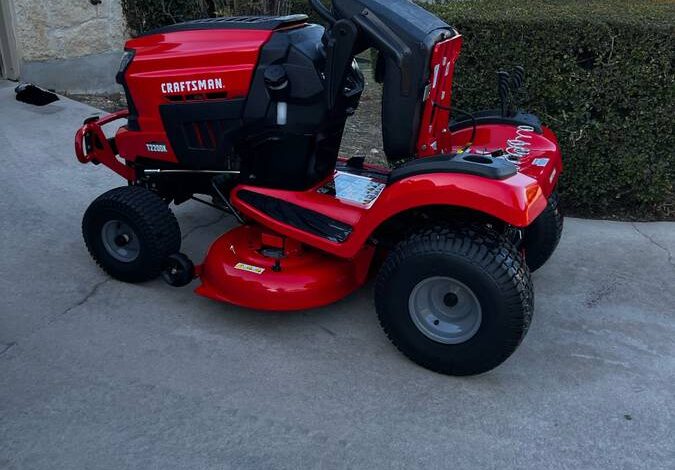
If your mowing time consistently exceeds 60-75 minutes per session, or if you have more than 1.5 acres to maintain, you have likely outgrown the walk-behind. A zero-turn or riding tractor will cut your mowing time by 40-60%. Read our Complete Zero-Turn Mower Guide for a full comparison and buying recommendations.
For those considering a second-hand machine, our used lawn mower buying guide walks you through exactly what to inspect before purchasing.
Conclusion
Walk-behind mowers remain the most versatile category in lawn care equipment. With models available from under $100 (reel) to over $900 (wide-area self-propelled), there is a perfect match for every property and budget. Invest in a quality machine, keep the blade sharp, and follow the annual maintenance schedule – your mower will be a reliable partner for years to come.
About the Author: Ron is a certified small engine mechanic with 15+ years of hands-on experience reviewing outdoor power equipment for homeowners and professionals.
About the product
About the seller
Name:
Contact the seller